CARE by MarianaAI
AI Native Clinical Copilot for Documentation and Decision Support
OVERVIEW
Executive Summary
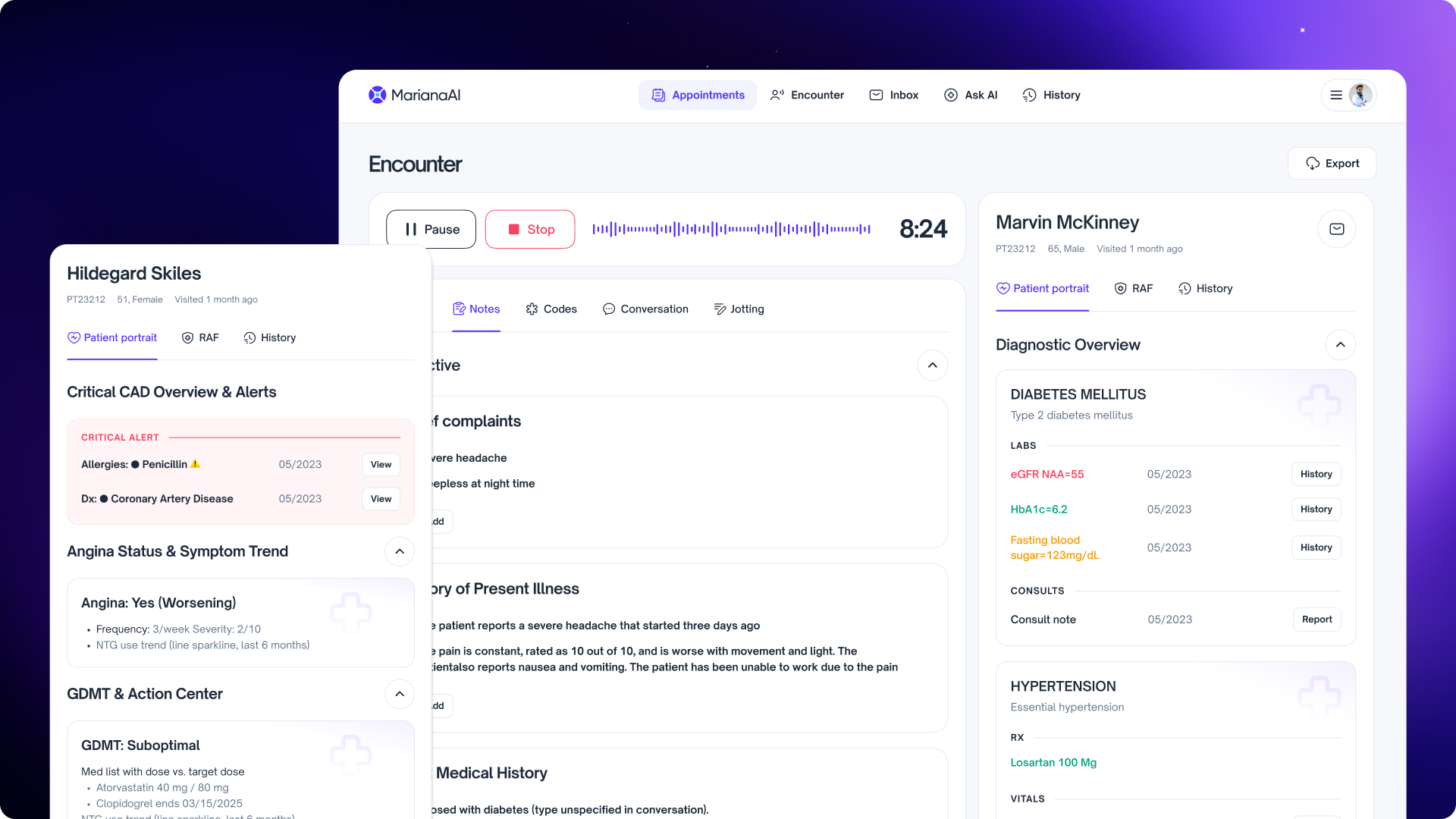
CARE is an AI native clinical copilot platform designed to reduce documentation burden, provide real-time decision support, and streamline downstream administrative workflows for healthcare providers. The product integrates directly with existing clinical systems and EHRs, enabling ambient documentation and AI assistance without disrupting clinician-patient interactions.
This project documents my work on the early design and foundational clinician experience for CARE, with a focus on workflow alignment, explainability, and scalable personalization across specialties. The goal was to design AI assistance that functions as background infrastructure supporting clinical work without adding cognitive or interaction overhead.
SCOPE
Scope of Work
Clinician facing documentation and review workflows
Real-time AI assisted decision support patterns
Human in the loop control and validation
UX considerations for deep EHR integration
APPROACH
Design Principles
The design approach centered on creating AI assistance that functions as background infrastructure supporting clinical work without adding cognitive or interaction overhead. Key principles guided the work:
RESEARCH
Clinician Workflow Stages
The clinician workflow was mapped across the full encounter lifecycle to identify touchpoints where CARE could reduce documentation burden and support decision-making without disrupting patient interaction.

RESEARCH
Encounter Journey Analysis
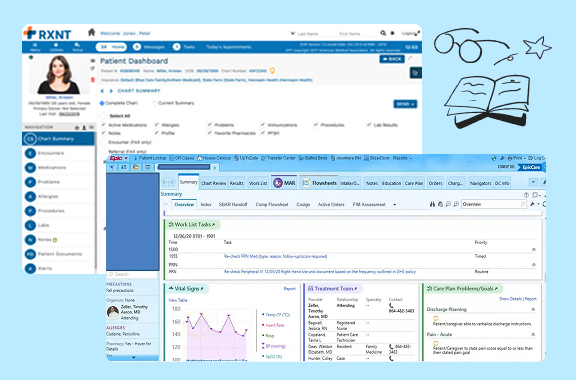
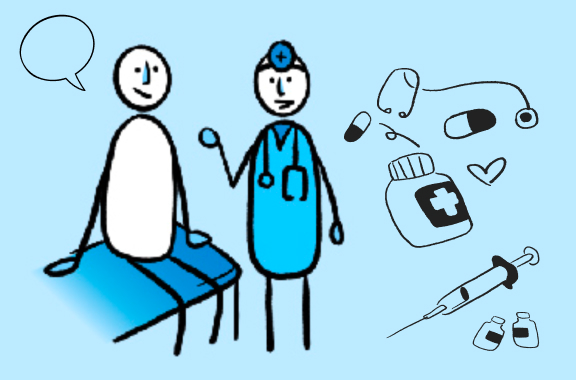
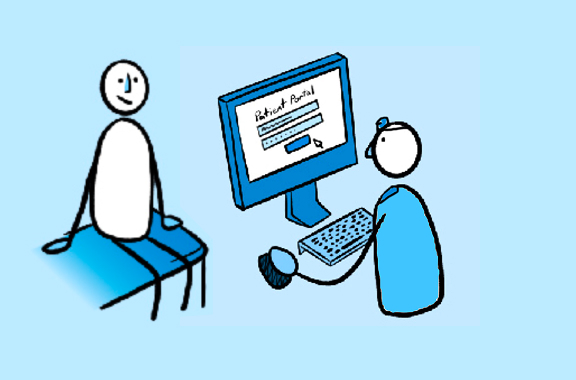
Before introducing CARE, we examined the clinician’s full workflow to understand where friction accumulates. The goal was to identify moments of high cognitive load and operational strain. The analysis revealed repeated context switching across scheduling, documentation, coding, and follow ups. Administrative tasks often extended beyond clinical hours.
The table below summarizes the key stages, actions, and pain points in the current experience.
Stage
User Actions
Touchpoints
Pain Points
Cognitive Load
Appointment Scheduling & Calendar Review
- Review daily schedule
- Assess visit types
- Adjust for cancellations or overbooking
- EHR scheduling module
- Front desk coordination
- Email/phone
- Limited insight into visit complexity
- Manual rescheduling
- No predictive support for no-shows
- Anticipatory stress
- Planning overhead
Pre-Visit Chart Review
- Open patient chart
- Review prior notes, labs, medications etc
- EHR patient chart
- EHR Medication History
- EHR Labs History etc
- Information scattered across modules
- No summarised patient snapshot
- Time pressure between visits
- Moderate cognitive load
Clinical Encounter
- Conduct interview
- Examine patient
- Gather findings
- Patient interaction
- EHR
- Physical Notes
- Must mentally retain information while navigating EHR
- Divided attention between patient and screen
- High cognitive load
Real-Time Documentation During Visit
- Enter symptoms
- History
- Assessment
- Plan into EHR
- EHR templates
- Forms
- Interrupts patient rapport
- Rigid templates
- Navigation friction
- Frustration
- Task switching fatigue
Coding & Billing Tasks
- Select diagnostic and Procedure Codes
- EHR coding module
- Codes not surfaced contextually
- Separate mental translation from note to code
- Compliance anxiety
- Administrative anxiety
Orders & Follow-Ups
- Enter labs
- Referrals
- Prescriptions
- Multiple EHR modules
- Context switching across screens
- Manual coordination for follow-up scheduling
- Irritation
- Friction accumulation
End of the Day Wrap-up
- Sign off notes
- Reconcile incomplete documentation
- EHR dashboard
- Backlog from earlier visits
- Documentation spills into after hours
- Fatigue
- Burnout accumulation
Stakeholders Alignment
Cross-functional perspectives were gathered to clarify priorities, constraints, and success criteria across groups. Each function evaluates the product through a distinct lens, including clinical efficiency, system stability, financial performance, and scalability.
Key Findings
Stakeholder
What They Care About
Alignment Focus
Clinicians
- Reduce documentation burden
- Protect patient interaction
- Structured documentation
- Ambient AI
- Minimal workflow disruption
- Human control
IT / EHR Teams
- Stable integration
- System performance
- Seamless EHR integration
- Low technical overhead
Compliance / Billing Teams
- Coding accuracy
- Reduced denials
- Structured data capture
- AI-assisted coding
Executive Leadership
- ROI
- Scalability and Adoption
- Measurable impact
- Configurable platform
DEMO
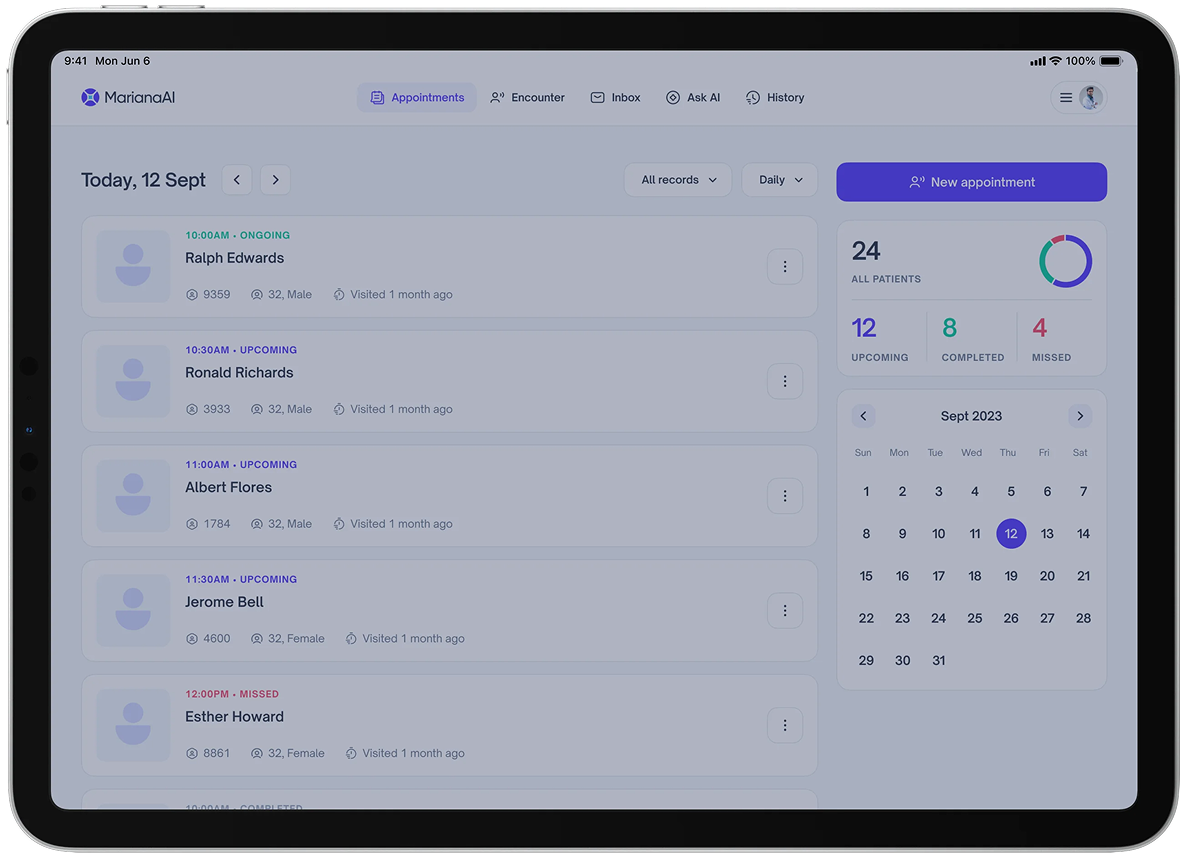
Product Walkthrough
An interactive walkthrough of the clinician experience is available below, showcasing the core workflows and AI-assisted features designed for CARE.
Additional Details
Due to the sensitive nature of healthcare product development, detailed design artifacts and research findings are available upon request in a confidential context. Feel free to reach out at raza2393@gmail.com.